
Clinical Excellence in Workers’ Comp ~ Strategic Dispensing in a Regulated Landscape


1. The Strategic Divide: Rx vs. OTC
In 2026, the “Rx vs. OTC” decision is no longer just about potency; it is about jurisdictional compatibility and clinical excellence in Workers' Comp.
Rx Medications: Best positioned for states without a closed formulary and where reimbursement is tied to established AWP benchmarks.
OTC Medications: The brand OTC products are designed for states that don’t have a maximum allowable reimbursement cap, while the generic OTCs play a pivotal role in states with a closed formulary.
2. Streamlining Workers’ Comp: Terrain’s OTC Portfolio for ODG States
In most states that have adopted the ODG drug formulary, products with Y status are first-line treatments requiring no prior authorization. By prioritizing these ODG-aligned options, your clinical team ensures faster patient care and a more predictable billing process.
The following states currently operate under the ODG Drug Formulary: Arizona, Indiana, Kentucky, Montana, Oklahoma, Tennessee, and Texas. Nevada will join this group in July 2027.
Four Terrain products carry Y status on the ODG formulary:

Each of these products addresses a distinct clinical need in the injured worker population: Meloxicam for inflammatory musculoskeletal pain, ProlaxaTM for opioid-induced constipation, and the topical analgesics for localized pain relief without systemic exposure.
Important State Exceptions: Three states warrant specific attention before prescribing.

3. Terrain’s OTC portfolio for closed formulary states
Single-ingredient OTC generics are your lowest-friction option in highly restrictive closed formulary states like New York, Arkansas, Ohio, Delaware and Washington. Straightforward formulations are less likely to encounter reimbursement hurdles than branded or multi-ingredient products.
New York* is a useful illustration: Lidocaine 4% Patch, Capsaicin Patch, and Methyl Salicylate Cream all hold Phase A and Phase B status across all musculoskeletal categories on the state formulary, meaning they are recognized as preferred treatment options at multiple stages of care.
*Physicians in NY can dispense medication, but typically for no more than a 72-hour supply. There are specific situations where this limit may not apply. Advanced Rx Mail Order Pharmacy Services is a good option in this state.
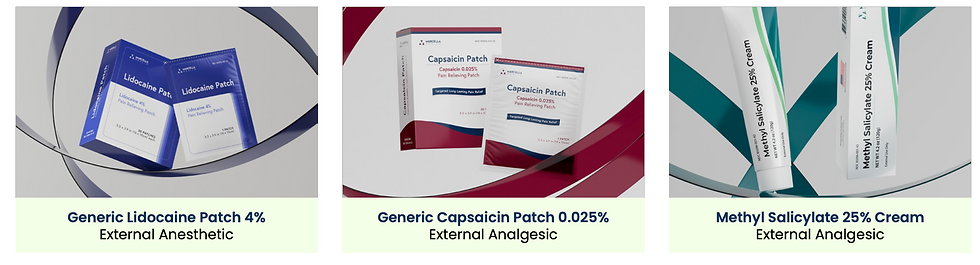
Beyond formulary fit, single-ingredient topicals offer a predictable tolerability profile, which matters in workers’ comp populations that are often managing multiple medications simultaneously.
4. LidoPro®: The OTC brand trusted by physicians for over 12 years
Terrain’s LidoPro® lineup is particularly well positioned for OTC opportunities in states with strong AWP-based reimbursement formulas and open formularies, including Hawaii, Illinois, and Alabama.

LidoPro® Ointment and LidoPro® Patch feature multi-ingredient anesthetic and analgesic formulations that are non-opioid and non- sedating, supporting pain relief while allowing patients to maintain normal function during recovery.
5. Navigating Rx Fee Schedules: Where Terrain’s Rx Products Perform Best
For Terrain’s Rx portfolio, knowing where each product performs best reduces administrative burden and protects reimbursement.
Hawaii, Maryland, South Dakota, Illinois, and Alabama are just among some of the states that present strong reimbursement environments for Rx products with minimal friction.
For these states, these 4 Rx-only products are well suited:

States Favoring Rx Products but Restricting In-Office Dispensing
Florida has historically favored Rx products due to regulatory documentation requirements related to OTC product cost acquisition. However, on February 25, 2026, the First District Court of Appeal for the State of Florida ruled that carriers may now deny reimbursement for all medications dispensed in-office. Advanced Rx Mail Order Pharmacy Services is a good option in this state.
Pennsylvania prohibits physician reimbursement for OTC products, making Rx products the only viable option in the state. However, regulations also limit dispensing to a 30-day supply with no refills, which significantly restricts in-office dispensing. Advanced Rx Mail Order Pharmacy Services is a good option in this state.
States with Topical Caps: Lead with Meloxicam
In Arizona*, Georgia, South Carolina, and Mississippi, maximum allowable reimbursement caps on topicals limit the practical value of gels and patches. Meloxicam, as an oral, sits outside those cap structures entirely and is the stronger lead in these states.
Louisiana applies a broader constraint: a $750 limit on non-emergency medical care that spans all products. Physicians dispensing in Louisiana should be mindful of that ceiling when building out a patient’s full treatment regimen.
Colorado reimburses Rx topicals and patches well, but caps non-prescription creams at $31.21 and non- prescription patches at $72.83 per 30-day supply, limiting the OTC generics line. Colorado also carries a strong generic prescription preference, making Meloxicam a natural fit as a generic oral NSAID. Take note that physicians may not prescribe more than a 60-day supply.
In Michigan, regulatory cost acquisition documentation requirements for topicals may add friction to gel and patch dispensing. Meloxicam, as an oral, sidesteps those requirements and is the lower-friction option for physicians in that state.
*In Arizona, a physician dispensing medication from their office is generally only entitled to receive reimbursement for those medications provided within the first seven days from the date of the injury, and is limited to a one-time, 10-day supply.
6. The Terrain Advantage: Function over Friction
Whether it’s the 12-hour waterproof adhesion of Lidothol® ES or the multi-action relief of LidoPro®, Terrain products are engineered for the realities of the workplace. By aligning these products with the correct state- level reimbursement logic, clinics can ensure that clinical excellence remains financially viable.


Advanced Rx in partnership with Terrain Pharmaceuticals — Insider Guide
www.arxmgt.com | amsupport@arxmgt.com | 925-621-2903 / 888-772-7250

Top Free Games seems to be an attractive substitute for when I want browser-based games rather than having to download something. There is enough variety to allow me to find something entertaining without any trouble. Especially useful is the option to move between genres.
Has anyone else used a name generator when creating usernames? I usually overthink names, so having different themes to start from made the process much easier.